
Beyond the Business Plan: Navigating Grief and Leadership in the Workplace
In business, we spend an enormous amount of time building contingency plans. We plan for market shifts, supply chain failures, and sudden leadership changes. Yet, there is one certainty that will eventually impact every single employee, colleague, and founder—and it is the one thing we are consistently least prepared for: grief.
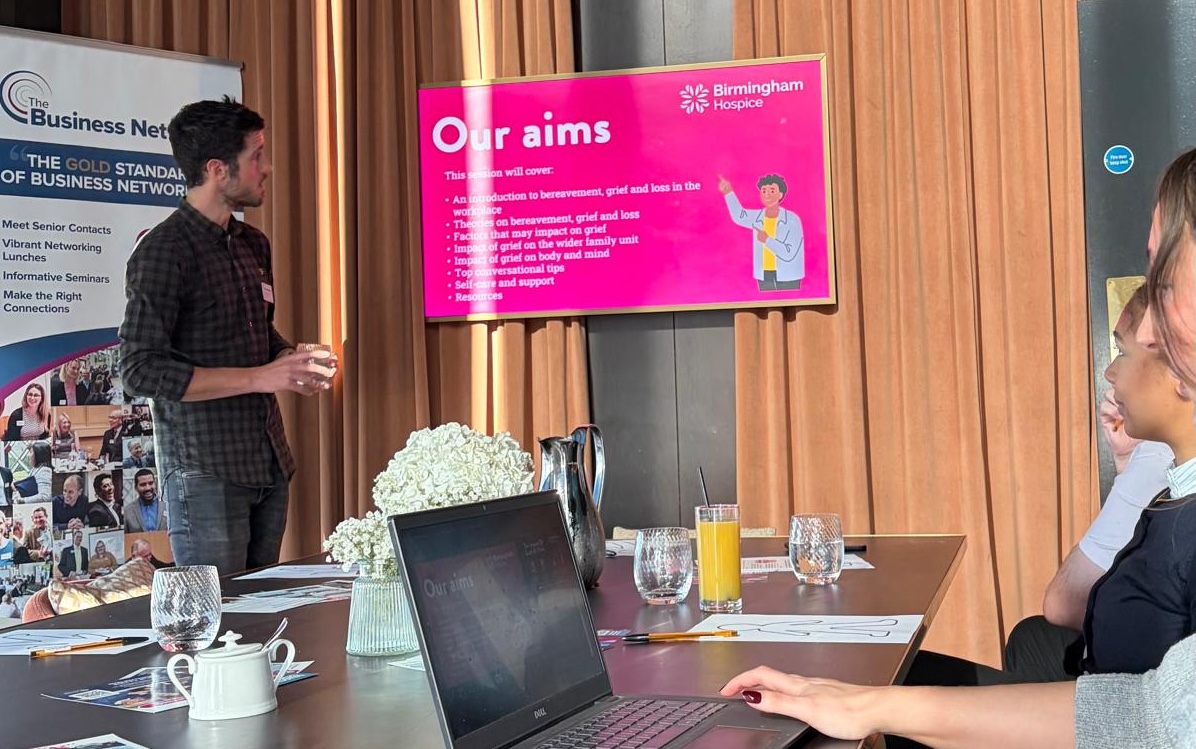
At a recent The Business Network seminar in Birmingham, we were privileged to host a deeply insightful and necessary session on Grief and Bereavement in the Workplace. Led by Luke Manley and supported by Esme Lloyd-Kelly from Birmingham Hospice, the seminar challenged our core assumptions about how we support each other when the worst happens.
As business leaders, our instinct is often to “fix” a situation or to quickly return to a baseline of productivity. However, as Luke and Esme powerfully demonstrated, grief is not a problem to be solved; it is a profound human experience that requires empathetic navigation.
The Reality of Grief at Work The statistics shared during the seminar were sobering and highlight a critical failure in our professional support systems. A staggering 58% of employees feel that their performance is negatively affected by grief in the months following a bereavement. Even more concerning, 54% worry that taking necessary time off to grieve will directly impact their job security.
Furthermore, 29% of employees admit they would not feel confident knowing what to say to a grieving colleague, a discomfort mirrored by the 14% of HR professionals who admitted they wouldn’t know how to navigate the conversation either.
This data paints a clear picture: we are a workforce that is grieving, yet we are fundamentally unsure of how to support each other through it.
The Five Stages of Grief: A Non-Linear Journey We often think of grief as a linear progression: Denial, Anger, Bargaining, Depression, and finally, Acceptance. The seminar shattered this misconception. Grief is not a neat checklist. An individual might reach acceptance, only to be triggered by a sudden memory—a song on the radio, an anniversary, or a familiar scent—and instantly be pulled back into the depths of depression or anger.
As leaders, we must understand that an employee’s grief does not end just because their bereavement leave is over. Support must be ongoing and adaptable.
Growing Around Grief One of the most profound concepts discussed was the idea that grief never truly shrinks. Instead of expecting someone to “get over it,” we must understand that the grief remains the same size. What changes is the person’s ability to grow around the grief. Over time, as their life expands with new experiences and support, the grief remains, but they become better equipped to carry it.
Sympathy vs. Empathy: The Critical Distinction Perhaps the most crucial takeaway for anyone in a leadership or HR role was the distinction between sympathy and empathy, beautifully illustrated by the work of Dr. Brené Brown.
-
Sympathy creates disconnection. It is looking down into the darkness from a place of safety and saying, “Ooh, it’s bad down there, huh? Want a sandwich?” It is a response that often seeks to find a silver lining (“At least they had a long life”). Sympathy rarely heals.
-
Empathy fuels connection. It is the willingness to climb down into the dark with the person and say, “I know what it’s like down here, and you are not alone.” Empathy requires vulnerability. It means choosing not to try and fix the situation with platitudes, but instead offering genuine presence. As the seminar highlighted, a response rarely makes something better; what makes something better is connection.
How We Can Do Better The seminar provided practical advice on what not to say to a grieving colleague. We must strip away euphemisms and uncomfortable platitudes. Avoid phrases like, “I know exactly how you feel,” “Time heals all wounds,” or “At least they are in a better place.”
Instead, we can offer simple, honest support:
-
“I don’t know what to say right now, but I am here for you.”
-
“That sounds incredibly difficult.”
-
Or simply providing a quiet, judgment-free space to listen.
We also explored the concept of “disenfranchised grief,” such as mourning the loss of a pet or a public figure, emphasizing that we must validate all forms of loss without judgment.
A Call to Compassionate Leadership
The session led by Birmingham Hospice was a powerful reminder that our businesses are built by human beings. When we create environments where people feel supported in their darkest moments, we don’t just build better companies; we build a better, more compassionate community.
As we returned to our networking and business strategy, the energy in the room was different. We were reminded that true leadership isn’t just about managing the bottom line; it is about how we care for the people who help us build it.
To learn more about supporting your team or to access resources from Birmingham Hospice, please visit their website or connect with them at our next event.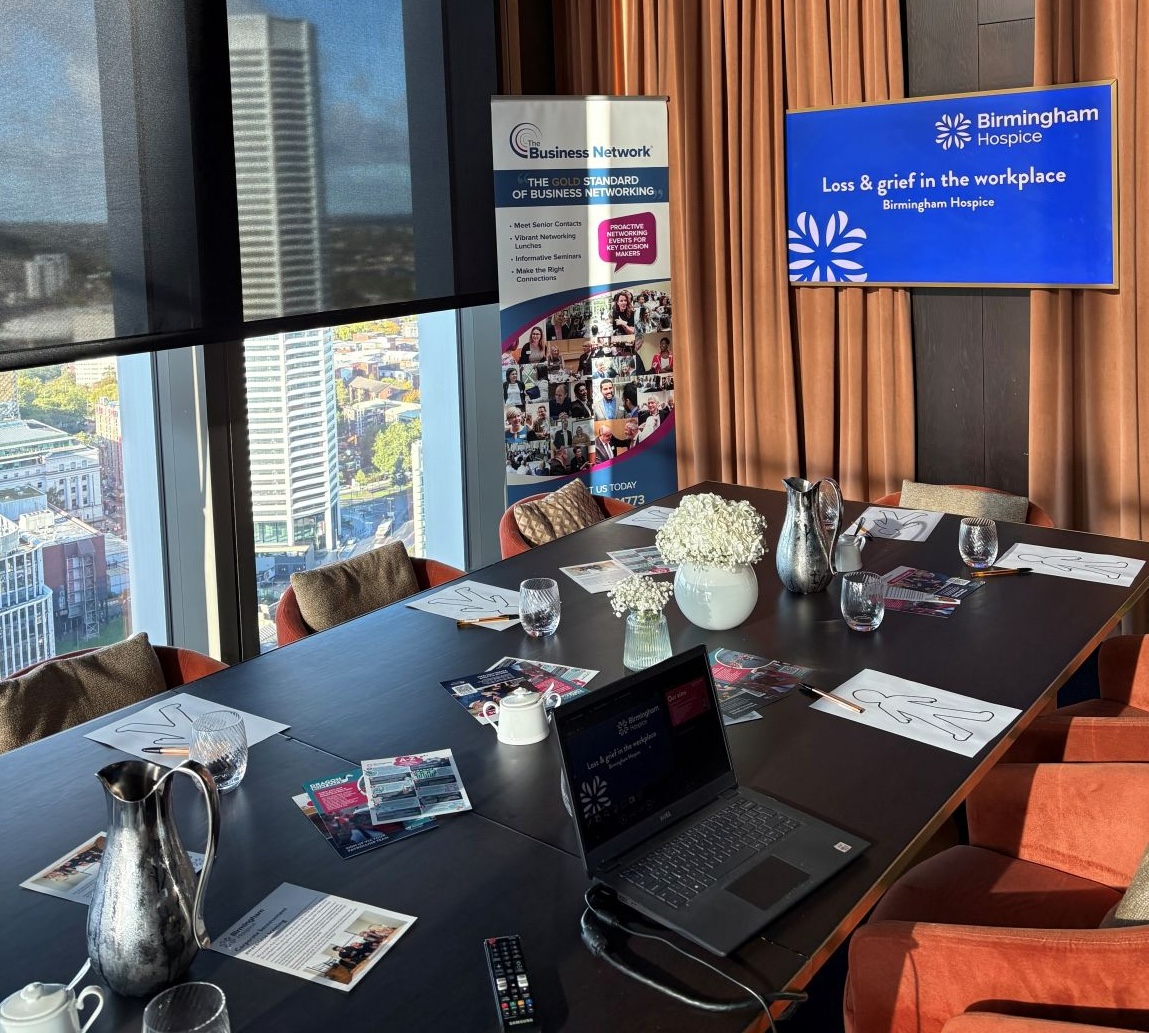


 incorporating
