Unlocking Immediate Wins Through Trusted Collaboration: The New Era of R&D Tax Relief
In the ever-evolving landscape of UK business, few topics generate as much debate, confusion, and opportunity as Research and Development (R&D) tax relief. For years, the scheme was viewed by many as a “Wild West”, a landscape dominated by aggressive marketing, volume-based claims, and a fundamental misunderstanding of what truly constitutes commercial innovation.
However, as discussed in our latest Business Network Birmingham seminar, the tide has definitively turned.
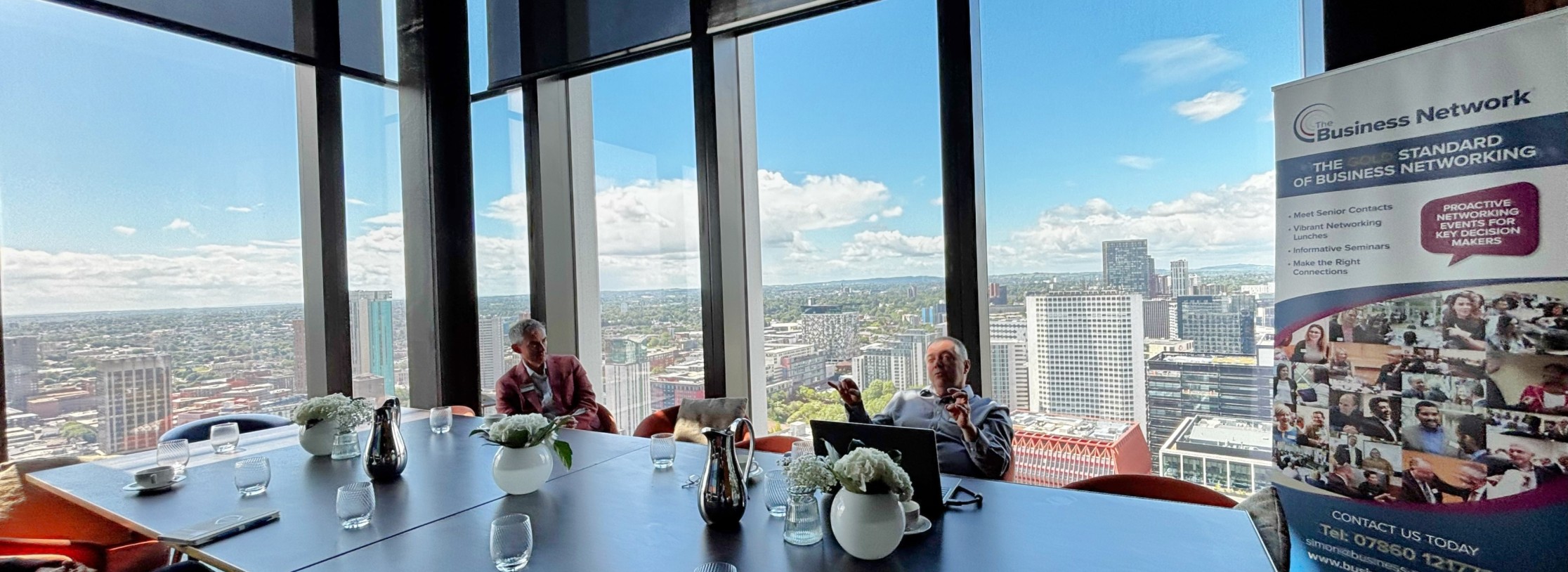
Led by Terry Cheesman, a leading expert in R&D tax strategy and risk management from Zilliant Tax (the independent successor to the highly regarded Haines Watts R&D unit), this month’s mastermind session provided a masterclass in navigating the new regulatory environment. The overarching message for Birmingham’s senior decision-makers was clear: where others see the threat of increased HMRC scrutiny, smart businesses see an unprecedented opportunity for funded innovation and sustainable commercial growth.

This comprehensive guide, based on Terry’s exclusive seminar and the collective intelligence shared by our members, explores the profound changes in the R&D landscape, the danger of unregulated boutiques, the true nature of technological advancement, and how trusted collaboration is the key to unlocking tangible commercial wins.
1. The Shifting Landscape: Embracing HMRC Scrutiny
For the past three to four years, the UK government and HMRC have significantly ramped up their scrutiny of R&D tax claims. For business leaders, this shift has often been framed by the financial press as a crackdown, a tightening of the belt, or an administrative burden. However, a closer look reveals that this increased regulation is designed to protect genuine innovators and weed out bad actors.
The End of the “Easy Win”
Historically, the R&D tax relief space was relatively stable. Guidelines remained static, and claims were processed with a level of trust that, unfortunately, became ripe for exploitation. Today, the introduction of the new Department for Science, Innovation and Technology (DSIT) guidelines has fundamentally altered the playing field.
HMRC has introduced stringent new compliance measures, most notably:
-
The Additional Information Form (AIF): A mandatory requirement detailing the specific technological uncertainties and advancements of the projects being claimed.
-
Advanced Notification: A requirement for companies to pre-notify HMRC of their intention to claim, preventing retrospective “fishing expeditions” by aggressive tax agents.
-
Enhanced Risk Profiling: HMRC has deployed hundreds of new compliance officers, bringing a much sharper lens to the technical validity of claims.
The Duality of Risk Management and Commerciality
During the seminar, Terry highlighted a crucial duality that every successful business owner must master: the balance between commercial aspiration and rigorous risk management.
“I am very commercial,” Terry explained, “but I’ve also got a risk profile that I must set the bar to. Part of my challenge is having very good auditors who keep my commercial aspirations in check, ensuring that what we put through is absolutely robust.”
This is the cornerstone of the new R&D era. Companies can no longer afford to submit claims based on vague notions of “business improvement.” They must be able to withstand the scrutiny of trained auditors. Embracing this scrutiny doesn’t mean abandoning R&D claims; it means elevating the quality of your internal tracking, your project management, and your choice of advisory partners.
2. The Fall of the Unregulated Boutiques
To understand the current state of R&D tax credits, one must understand the recent history of the advisory market. Over the last decade, the industry saw an explosion of unregulated R&D “boutiques.”
Marketing-Led vs. Expertise-Led
These firms were rarely founded by tax professionals or technologists. Instead, they were marketing-led organizations. Their primary engine was the cold call: offering business owners the promise of “free money from the government” with “no risk” and “minimal time required.”
As Terry acutely pointed out to the room, these boutiques operated on a purely “volume-metric approach.” They lacked underlying tax expertise, they lacked technological strength, and their internal processes were often managed by untrained caseworkers relying on templated scripts rather than deep sector knowledge.
The Collapse and the Collateral Damage
When HMRC finally began to apply the brakes, demanding detailed technical justification for these claims, the boutique model collapsed. Many of these firms folded overnight, leaving their clients exposed to HMRC inquiries, penalties, and the repayment of previously awarded funds.
Furthermore, the professional indemnity (PI) insurance market is currently experiencing a massive lag. Many businesses that thought they were protected by their advisor’s insurance are finding out too late that the coverage is invalid or the firm no longer exists to claim against.
The lesson for the Business Network community is stark: If your R&D claim is being managed by a firm that relies more on aggressive sales tactics than on qualified accountants, chartered tax advisors, and competent industry professionals, you are carrying a hidden and highly volatile risk on your balance sheet.
3. Trusted Collaboration in Action: The Armstrong Bell Experience
The antidote to the aggressive boutique model is trusted, strategic collaboration. At The Business Network, our ethos is built entirely around “brain trust” networking—where senior leaders collaborate with proven experts to solve complex problems, rather than simply pitching to one another.
This philosophy was perfectly encapsulated during the seminar by a powerful testimonial from fellow Business Network member William Copley, Managing Director of Armstrong Bell.
Armstrong Bell, a leading provider of business telecommunications and IT services, operates in a highly technical sector where the line between routine system integration and genuine technological advancement can often seem blurred to an untrained eye.

Reflecting on the seminar’s themes, William shared his own experience:
“As Terry rightly pointed out today, the difference between an aggressive volume-metric boutique and a true strategic partner is night and day. When we looked at our R&D strategy at Armstrong Bell, we realized we needed more than just someone to fill in a form and hope for the best. Working with experts who genuinely understand the deep nuances of telecommunications infrastructure and software integration meant we weren’t just ticking compliance boxes—we were actually mapping our future innovation pipeline.
A proper R&D advisor challenges your thinking. They act as that ‘competent professional’ Terry described, interrogating the technology to find the true uncertainties. Because of that trusted collaboration, our R&D claim became a fully robust, risk-managed process. It ceases to be a retrospective tax exercise and transforms into a proactive growth strategy that funds our next generation of telecom solutions.”
William’s insight underscores the core message of the event: Smart businesses do not tackle complex tax legislation in isolation. They build a consortium of trusted advisors.
4. Opportunity in Uncertainty: Lessons from the Pandemic
A recurring theme in high-level business strategy is the ability to find opportunity where others see only threats. Terry shared a compelling anecdote from the onset of the COVID-19 pandemic that perfectly illustrates this mindset.
When the world shut down in early 2020, panic swept through the global economy. Traditional manufacturing ceased, supply chains fractured, and businesses braced for catastrophe. Yet, for Terry’s specialized R&D unit, it resulted in the most productive and intense period in their history.
Agility and the Demand for Capital
“For eight weeks, it was back-to-back,” Terry recalled. “While many were trying to figure out how to shut down, our clients were lined up for cash. They recognized that agility was their only survival mechanism.”
The businesses that thrived during the pandemic were those that immediately pivoted their operations—retooling manufacturing lines, developing new digital delivery systems, and redesigning products to meet sudden, unprecedented market demands. This rapid adaptation is the very definition of Research and Development.
Those companies that had already established a culture of identifying and tracking R&D, and had a trusted advisory relationship in place, were able to unlock critical cash flow from HMRC exactly when they needed it most.
The lesson here extends far beyond the pandemic. Economic downturns, supply chain shocks, and regulatory changes are inevitable. The businesses that view R&D tax relief not as a “nice to have” bonus, but as a strategic financial mechanism to fund agility, will always outmaneuver their competitors.
5. The Built Environment: Green Transition and the Circular Economy
One of the most fascinating segments of the seminar focused on where true innovation is currently happening. It is not always in a sterile laboratory; increasingly, it is happening on construction sites, in energy grids, and within the supply chains of traditional industries.
The Drive Toward Net Zero
The push towards net-zero emissions is forcing a complete reimagining of the built environment. Terry highlighted several incredible examples of UK businesses leveraging R&D to lead this green transition.
-
The Circular Economy: We are moving away from the “take, make, dispose” model. Innovative companies are developing new methodologies to reclaim, recycle, and repurpose building materials, fundamentally altering the lifecycle of commercial construction.
-
Sustainable Materials: Terry discussed clients working on revolutionary green oak sustainable builds, pushing the boundaries of traditional timber engineering to create highly efficient, low-carbon structures that meet rigorous modern safety and environmental standards.
-
Hydrogen Innovation: While electric vehicles dominate the headlines, significant R&D is being poured into hydrogen fuel cell technology. This isn’t just about passenger cars; it’s about heavy haulage, industrial machinery, and creating sustainable ecosystems for commercial transport.
The Human Element of Innovation
Innovation doesn’t have an age limit. Terry shared the inspiring story of Colin, a 70-year-old entrepreneur tackling the pressing issue of energy poverty.
Years ago, the Return on Investment (ROI) for solar photovoltaics (PV) was a long-term play, often taking 10 to 15 years for consumers to see a return. Today, with shifting energy prices and technological advancements, that landscape has changed. Colin’s relentless dedication to engineering new, hyper-efficient hybrid solar and heating solutions demonstrates that true R&D is driven by a desire to solve real-world human problems.
If your business is involved in the green transition—whether through process improvement, material science, or waste reduction—you are likely undertaking qualifying R&D. The challenge is ensuring you have the right professionals to help you articulate that technological baseline to HMRC.
6. Navigating the Tech Hype: The AI Bubble vs. True Infrastructure Innovation
No discussion on modern innovation is complete without touching upon Artificial Intelligence. However, the seminar provided a much-needed reality check for business leaders caught up in the current AI hysteria.
The Dot-Com Echo
Terry drew a sharp parallel between the current AI landscape and the dot-com bubble of the late 1990s and early 2000s. Today, virtually every software company claims to be an “AI company.” Countless businesses are buying off-the-shelf AI wrappers, integrating them into their existing CRM systems, and attempting to claim this as groundbreaking R&D.
HMRC is acutely aware of this. Simply using AI is not R&D. Buying a license for a large language model and plugging it into your website does not constitute an advance in science or technology.
Where the Real AI Innovation Lives
So, where is the true R&D happening in the tech sector? According to the experts, it’s not in the front-end chatbots; it’s in the underlying physical and digital infrastructure.
As Terry explained, the real heroes of the AI revolution are the engineers solving the monumental physical challenges that AI creates. He cited the example of a German entrepreneur building next-generation data centers.
AI requires an astronomical amount of processing power, which in turn generates an immense amount of heat. The true, qualifying R&D is happening in the development of closed-loop cooling systems, advanced thermodynamics, and high-efficiency power distribution networks required to keep these massive data centers from melting down.
The takeaway for the Business Network is vital: When assessing your IT projects for R&D potential, look past the marketing buzzwords. Are you simply implementing existing technology in a novel way, or are you fundamentally overcoming a baseline technological uncertainty? Having a “competent professional” (like the team at Armstrong Bell) to help you differentiate between routine IT upgrades and qualifying software R&D is the only way to ensure your claim is secure.
7. The Merged Scheme: Clarity, Certainty, and the New Baseline
Looking to the future, the most significant change for UK businesses is the transition to the newly merged R&D tax relief scheme.
The End of the Two-Tier System
Previously, the UK operated two distinct schemes: the SME (Small and Medium-sized Enterprise) scheme and the RDEC (Research and Development Expenditure Credit) scheme for larger companies. These have now been merged into a single, unified system.
The financial reality of this merger is a lower headline rate of return for many SMEs. In the past, under the SME scheme, companies could see a return of up to 33% (or a 130% uplift on qualifying expenditure). Under the new merged scheme, the net benefit will hover around the 15% to 16.2% mark for most profitable companies.
Why a Lower Rate is a Positive Evolution
While a reduction in the financial yield might initially seem like a blow, seasoned business leaders understand the hidden benefit: Market Certainty.
The artificially high rates of the old SME scheme were the very honey that attracted the aggressive, unregulated boutiques. It created a gold rush mentality that led to widespread fraud and boundary-pushing.
With the rate stabilized at a realistic, unified level, the “Wild West” element is being stripped out of the market. The Big 4 accounting firms, which had largely abandoned smaller SME claims due to the reputational risk and high compliance costs, are adjusting their models, though many still leave a gap in the mid-market.
This leaves a perfect sweet spot for highly competent, independent tax specialists—like Zilliant Tax and our trusted network of regional accountants—to provide robust, defensible, and highly strategic R&D advice to serious business owners.
As Terry noted, when the rules tightened, nearly 40% of spurious claims in certain sectors were wiped out. Those were claims that should never have been submitted in the first place. For the legitimate businesses that remain, the merged scheme offers a clear, stable, and reliable mechanism for funding future growth.
8. The Role of the “Competent Professional”
A phrase that echoed throughout the seminar was the “Competent Professional.” This is a specific HMRC term, but it serves as a powerful guiding principle for all business operations.
When HMRC reviews an R&D claim, they do not just look at the numbers. They look at the personnel. Who is driving the innovation? Who identified the technological uncertainty?
If a company submits a claim for a complex software architecture project, but their technical lead is an intern, or their claim report was written by a salesperson at a boutique agency, HMRC will immediately flag the claim.
You must demonstrate that the people guiding your projects have the requisite experience, qualifications, and industry track record to legitimately claim that a problem was “uncertain” to a competent professional in the field.
This principle applies just as strongly to your choice of tax advisor. As Terry outlined, his firm works alongside 5 national accounting brands and 25 independent practices. They act as the deep-domain experts, supporting the broader commercial advice provided by the client’s primary accountant. It is this layered, professional approach—where the accountant, the R&D specialist, and the client’s internal technical lead work in unison—that guarantees success.

Conclusion: The Power of the Brain Trust
The landscape of business growth and funded innovation is complex, shifting, and deeply unforgiving of those who take shortcuts. However, as Terry’s seminar so brilliantly demonstrated, it is also rich with opportunity for those who approach it with integrity, expertise, and a collaborative mindset.
The days of isolated decision-making and falling for the aggressive pitches of transient marketing firms are over. The future belongs to the “Brain Trust.”
This is the core value proposition of The Business Network Birmingham. We do not gather to simply exchange business cards or deliver elevator pitches. We gather to share high-level, strategic intelligence. Whether it is understanding the nuances of the new DSIT guidelines, learning how to structure a secure R&D claim, or simply finding a trusted technology partner like Armstrong Bell to help navigate infrastructure changes, our community thrives on shared knowledge.
When smart businesses think together, they win together. If you are a senior decision-maker in Birmingham looking to move beyond surface-level networking and tap into a room full of strategic opportunity, we invite you to join the conversation at our next Executive Lunch.
Secure your place at the table and elevate your commercial strategy with Birmingham’s leading business network.


 incorporating